

The bags are packed and the route is set, from the skyscrapers of Panama City to the remote islands of San Blas. But before the excitement takes over, there’s one unglamorous yet vital item for the to-do list: your health.
Travelling to Central America means stepping out of your comfort zone medically, too. The tropical climate is a paradise for plants and animals, but unfortunately also for viruses and bacteria. The good news: Panama has one of the best healthcare systems in Latin America, and with the right preparation you can keep the risk to a minimum.
This guide covers which vaccinations for Panama travellers really need, what the yellow fever rule is all about and what belongs in your travel first-aid kit.
(Note: This article is for information only and does not replace medical advice. Ideally consult a travel medicine specialist 6 weeks before departure.)
Required vs. optional: which vaccinations are mandatory?
One of the most common questions is: “Is there a vaccination requirement for entry?” The answer is: yes and no.
The yellow fever vaccination
This is the trickiest part of Panama vaccinations.
- Entering from Europe: If you fly directly from Europe (e.g. Frankfurt, Madrid, Amsterdam) to Panama, no proof of yellow fever vaccination is required.
- Entering from risk areas: If you combine your trip with South America (say, you’ve come from Colombia, Ecuador, Brazil or Peru), proof (the yellow vaccination card) is mandatory on entry – this applies to all travellers aged 1 and older.
- Travel within Panama: The Panamanian government strongly recommends the vaccination if you head to eastern areas (everything east of the Panama Canal: Chepo, Darién, San Blas / Guna Yala). Checks rarely happen on domestic flights to San Blas, but the health risk is real there.
The basics: recommended travel vaccinations
Regulations aside, tropical medicine institutes and foreign ministries recommend the following protective measures for all travellers:
1. Boost your standard vaccinations
Before we get to tropical diseases: is your routine protection up to date?
- Tetanus, diphtheria, whooping cough (pertussis): Should be refreshed every 10 years.
- Measles: Check your vaccination record. Adults in particular often have gaps.
2. Hepatitis A (food & water)
This is the single most important “travel vaccination”. Hepatitis A spreads through contaminated water or food (unpeeled fruit, salad, ice cubes). Since eating at street stalls is popular in Panama, this protection is absolutely essential.
3. Hepatitis B
Transmitted through bodily fluids. Recommended for long stays, planned medical procedures (or unforeseen accidents) and sexual contact. Combined vaccines for hepatitis A and B are available.
4. Typhoid
Also spread by poor hygiene. If you’re a backpacker or you eat a lot of street food and travel off the beaten luxury-resort track, the vaccination (oral or injection) is recommended.
5. Rabies
Panama has abundant wildlife. A bite from a stray dog or (more often than you’d think) a monkey or a bat can be fatal. The vaccination buys you valuable time to reach a hospital in an emergency. It’s strongly advisable for trekkers heading into remote areas (Darién, the Bocas del Toro hinterland).
Overview table: vaccination protection at a glance
To help you keep track, here’s a summary for your planning:
| Disease | Transmission | Vaccine available? | Recommended for |
|---|---|---|---|
| Yellow fever | Mosquitoes (day-active) | Yes (live vaccine) | Travellers to the east (Darién, San Blas) & entry from South America |
| Hepatitis A | Food/water | Yes | All travellers (strongly recommended) |
| Typhoid | Food/water | Yes | Backpackers & long-term travellers |
| Rabies | Animal bites/saliva | Yes | Trekking travellers & children |
| Dengue | Mosquitoes (day-active) | Yes (new, limited) | Long-term stays (ask your doctor!) |
| Malaria | Mosquitoes (dusk-active) | No (tablets only) | Travel to risk areas (see below) |
| Zika / Chikungunya | Mosquitoes | No | Pregnant women should avoid risk areas |
Mosquito protection: more important than any shot
Many tropical diseases in Panama can’t be prevented by vaccinations for Panama at all. The only thing that helps is so-called “exposure prophylaxis”, meaning you avoid getting bitten in the first place.
Dengue, Zika & Chikungunya
These viruses are spread by day-active mosquitoes (often in cities too!). The symptoms resemble a severe flu with aching limbs (“breakbone fever”).
- Protection: Long, light-coloured clothing and repellents containing the active ingredient DEET (e.g. buy “OFF!” locally or bring “Nobite”). Herbal products barely help in the tropics.
Malaria
Panama City, the canal area and most tourist beaches are considered malaria-free or very low risk.
- High risk: Darién province (the border area with Colombia) and the Comarca Guna Yala (San Blas Islands).
- Precaution: If you’re travelling to San Blas, talk to a travel doctor about “standby medication” (emergency tablets to carry). Continuous prophylaxis (daily intake) usually isn’t necessary on standard routes.
What about COVID-19?
Panama had very strict rules for a long time. These days (as of 2026) you can enter again without restrictions, and proof of vaccination or testing is generally no longer required. Even so, carry your digital vaccination certificate (CovPass app or printout) just in case rules change at short notice or an airline asks for it.
💡 NOTE: The “yellow card” as a document
If you’re planning a combined Panama–Colombia trip, your yellow vaccination card becomes the most important document alongside your passport.
Airlines check extremely strictly for the yellow fever vaccination when you board in Colombia (e.g. Bogotá or Cartagena) heading to Panama. The vaccination must have been given at least 10 days before entry. If it’s only 9 days old, they won’t let you on the plane. No joke! So book this appointment in good time.
The travel first-aid kit for Panama
Panama’s pharmacies (“Farmacias”) are well stocked. In Panama City you can get almost everything you’d find at home, often even over the counter, including things that would be prescription-only in Europe, such as antibiotics (be careful with self-medication!).
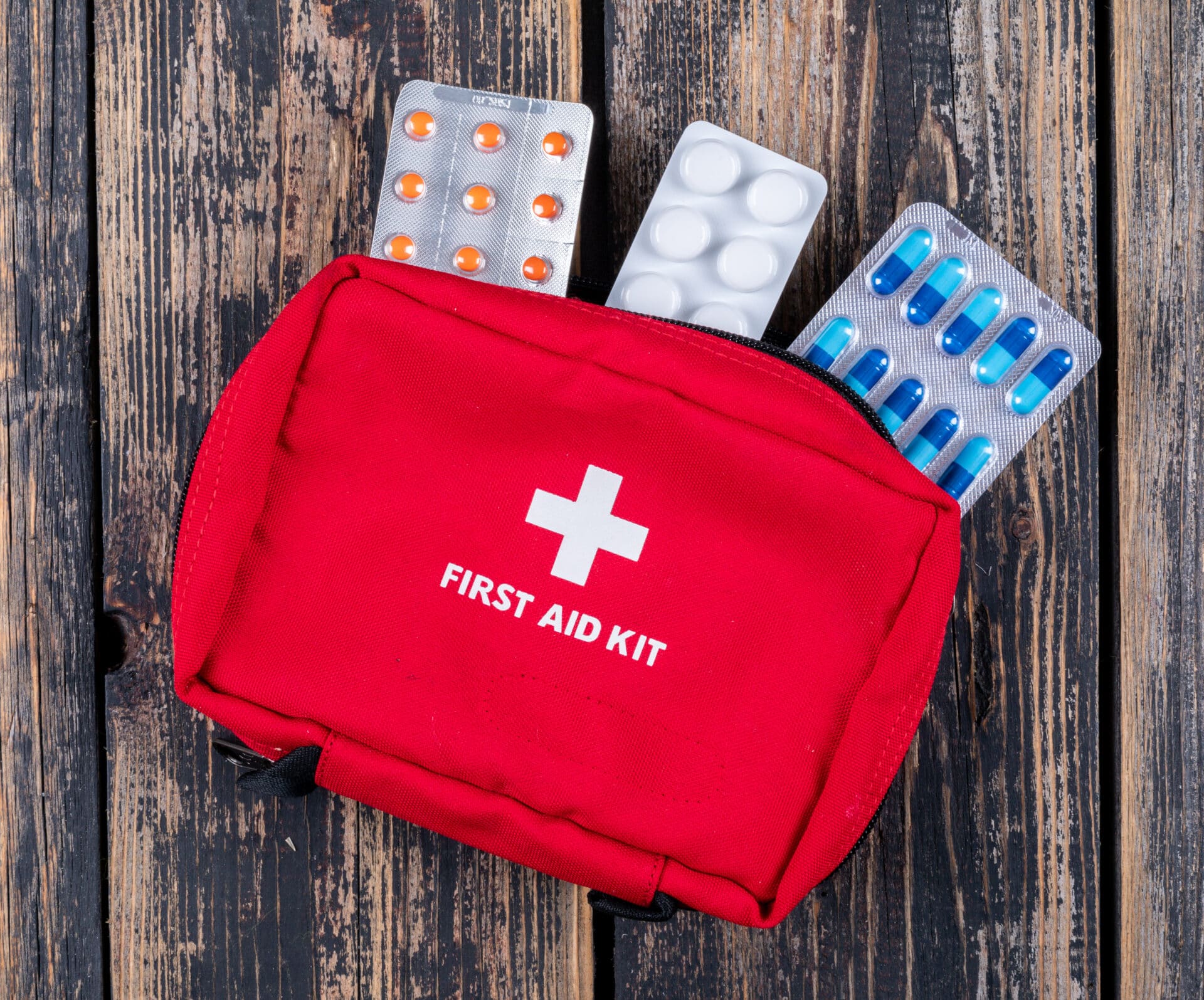
Even so, for remote regions (the Bocas islands, Santa Catalina, San Blas) you should carry the following:
- Stomach & intestines: Electrolytes (powder to counter dehydration from diarrhoea) and loperamide (Imodium) for emergencies (travel days).
- Painkillers: Paracetamol or ibuprofen (caution: if you suspect dengue fever, do not take ibuprofen or aspirin, as they thin the blood! When in doubt, always paracetamol).
- Wound care: Disinfectant spray (Octenisept or similar), plasters, wound ointment. Small scratches get infected faster in the tropics.
- Antihistamines: Gel to soothe itching from insect bites (Fenistil) or tablets for allergic reactions.
- Sun protection: Sunscreen (reef-safe!) and after-sun.
- Personal medication: In sufficient quantity, in your hand luggage!
A good jab is half the battle
Don’t let the list of diseases drive you crazy. Most tourists come home from Panama with nothing more than a sunburn and a heap of great memories.
Still, taking Panama vaccinations seriously is a sign of respect for nature and for your own body. If you’re protected against hepatitis A with a refreshed tetanus shot, you already cover 90% of the risks for “ordinary travellers”. Those who want to go deeper into the jungle need more lead time.
Learn more about tours in Panama
Disclaimer: Vaccinations for Panama – This blog article was researched to the best of our knowledge and belief. Medical standards and entry regulations can change. The information does not replace professional advice from a doctor or travel medicine specialist.
Is the yellow fever vaccination mandatory?
For direct entry from Germany, Austria or Switzerland: No. For entry from a yellow fever risk area (which includes almost all neighbouring countries in South America such as Colombia, Brazil or Ecuador): Yes. Proof is often checked as early as boarding the flight to Panama, and the vaccination must be at least 10 days old.
Can you drink the tap water in Panama?
In Panama City the tap water is considered drinkable and of good quality (“agua del grifo”), and many expats drink it without a second thought. On the islands (Bocas del Toro, San Blas) and in rural areas, though, stick to filtered or bottled water only to avoid stomach trouble. Tap water is usually fine for brushing your teeth.
Do I need malaria tablets for Bocas del Toro?
The risk in Bocas del Toro is considered very low (minimal risk). Most travel doctors don’t recommend prophylactic malaria tablets (“Malarone” or similar) here, relying instead on good mosquito protection. For San Blas (Guna Yala) and the Darién jungle, though, carrying them as “standby medication” is often recommended.


