

Panama Travel Tips – Everything on Entry, Safety, Climate & Health
Entry Requirements
German, Austrian and Swiss citizens, along with other EU nationals, don’t need a visa to enter Panama for a stay of up to 90 days. A machine-readable passport (burgundy) is enough, valid for at least another 3 months, and for a planned longer stay, for the entire intended duration of the stay.
On entry you’ll need to show either a return flight ticket or a valid onward travel ticket (by land or air) together with a valid visa for the destination country and a valid residence permit for the country of onward travel (a tourist visa on its own isn’t enough). You may also be asked to credibly show that you have sufficient funds for your stay. That means either USD 500 in cash or the equivalent amount available on your credit card account (verifiable by credit card statement).
Passport check on a day trip from a cruise ship: Please bring your passport with you; Panama’s immigration authority checks it when you come off the ship.
Note: If you transit through Canada or the USA (a flight via either country), an electronic travel authorization (ETA or ESTA) is mandatory for those countries!
Tip: Make a copy or take a photo of your passport (main page and entry stamp) and send it to yourself. That way you can still get to it even if you lose your phone.
Currency and Credit Cards
The country’s official currency is the Panamanian balboa (abbreviation PAB), but in practice the US dollar is what circulates, and has done since the railway was built in 1850. To be precise, only US dollar banknotes are in circulation; for coins you’ll find both US dollar coins and balboa coins, which are minted for Panama in the USA. That’s why all ATMs dispense only US dollars.
Credit cards (Mastercard and VISA) are widely accepted in restaurants and shops. A tip for cash: don’t carry large bills for purchases in souvenir shops and the like. It’s best to bring four 5-dollar bills and the rest in 20-dollar bills.
There’s no point exchanging euros in Panama. The airport will change them, but at a dreadful rate; the banks will too, also at a poor rate, and it’ll cost you half a day, and you may even have to prove where you got the euros from. Bank cards or ATM cards for withdrawing cash from machines work in many places. You can withdraw USD 250 per transaction and pay USD 5.25 in fees, which is far better than the exchange office at the airport. One caution: bank cards (Maestro) don’t always work smoothly. Before you travel, please check with your bank that your card(s) are enabled for use abroad.
Panamatura travel tip: For a two-week Panama trip, bring around USD 500 per person from home, depending on how much you pay by credit card and how much you plan to spend on purchases. You can withdraw the rest locally with your bank card.
We’d advise against bringing traveller’s cheques, as there’s no way to exchange them.
Vaccinations, Travel Illnesses and Health Tips for Panama
In Panama, the standard vaccinations from Europe will keep you well protected. The tales of malaria and yellow fever epidemics go back to the building of the Panama Canal from 1881 and were overcome long ago. The last domestic case of yellow fever in Panama was recorded in 1972.
Covid
Entry: There are currently no COVID-19-related entry restrictions. In healthcare facilities, though, a mask is still often required.
Pharmacies and Hospitals
You’ll find well-stocked pharmacies throughout the country, carrying a wide range of medications, especially for illnesses common to the region. For any long-term medication, it’s of course wise to bring enough from home for the whole trip.
The Ministry of Health runs hospitals and health stations all over Panama. On top of that, the social security institution has hospitals and clinics in every larger town for insured employees (Panama has just one social security institution, whether you’re a civil servant, a labourer, an office worker and so on). There are also plenty of private hospitals and clinics, and private doctors as well. The private hospitals in Panama City and the provincial capitals are of a very high standard. You pay directly for any visit and can then claim it back afterwards through your travel insurance. Healthcare in Panama is very good overall; private hospitals in particular match the standard of European hospitals, and private doctors take far more time with their patients than the statutory health insurance doctors back in Europe.
Tropical Illnesses
Tropical illnesses and which vaccinations are needed or recommended are, understandably, a big concern for every traveller, especially anyone heading to Panama for the first time.
Malaria
In all of Panama there are only a few cases a year, and most are concentrated in four remote areas (self-governed indigenous territories in eastern Panama and an isolated stretch of the Caribbean coast in the west) that almost no tourists visit. There’s no malaria in the areas you’ll be travelling to, so you need neither prophylaxis nor stand-by medication.
Yellow Fever
The last domestic case of yellow fever was recorded in 1972, and vaccination is generally discouraged for people over 60 and for pregnant women. You’d only need a yellow fever vaccination for Panama if you arrive from a yellow-fever-affected country (Brazil), or if you then go on to a country that requires the vaccination after a trip to Panama; these are: Aruba, Bahamas, Bolivia, Bonaire, Ecuador, Guyana, Honduras, Jamaica or Nicaragua (per information from Panama’s Ministry of Health).
The tropical illnesses that crop up occasionally in urban centres are dengue, Zika and chikungunya. No epidemics are being recorded at the moment, only isolated cases. There’s a vaccine for dengue only; the best protection is to avoid insect bites with clothing and insect repellent. Important: these illnesses don’t occur in the rainforest or at higher elevations, and hardly ever in rural areas, so you needn’t worry about them during visits and hikes in those regions.
Various sources online, as well as tropical-medicine doctors and tropical institutes in Germany, tend to recommend a long list of vaccinations and medications that simply aren’t necessary.
Travel Tip on Vaccinations
As a rule, it’s worth keeping up to date with the vaccinations you’d have in Germany/Europe anyway; no further vaccinations are necessary.
Sun and Skin
The two most important things for staying well in a tropical country are drinking enough and protecting yourself from the sun: always use sunscreen, wear a hat or cap, and bring sunglasses, because the sun can be very strong. In the dry season from December to April it hardly rains at all, and the sun shines hard the whole time; around midday the temperature climbs to about 34 degrees Celsius, so proper sun protection and plenty of fluids are essential.
Safety and Crime
Panama is a safe place to travel, even though foreign-ministry travel warnings often make it sound otherwise. Crime is concentrated in the slums and poorer neighbourhoods (in particular the poorer parts of Panama City and the centre of Colón, where many cruise ships dock). As an ordinary traveller, and as long as you steer clear of these areas, you can enjoy a worry-free holiday. On a group trip especially, visitors are very well looked after and briefed by the agency and tour guide, so the chance of falling victim to crime is very low. Still, as anywhere, you should stay alert and follow these rules:
- Don’t wave your phone, video camera or camera around carelessly.
- Leave valuable jewellery at home
- Don’t carry large amounts of cash
- Use the safe in your hotel (if there is one)
- Don’t be out alone at night in remote neighbourhoods
- When driving in Panama City, keep the car locked from the inside
Protests and road blockades do happen, and the protest culture is different from Germany or Austria, but it’s mostly peaceful, and as an uninvolved tourist people will happily explain what the protest is about. Respect the protesters, their actions and their reasons. If you come across a road blockade, please stay calm and don’t try to force your way through against the protesters’ wishes.
If you do get caught up in a protest, contact your travel coordinator, who can fill you in on the details, how long protests are likely to last, and any alternatives.
Taxi Rides
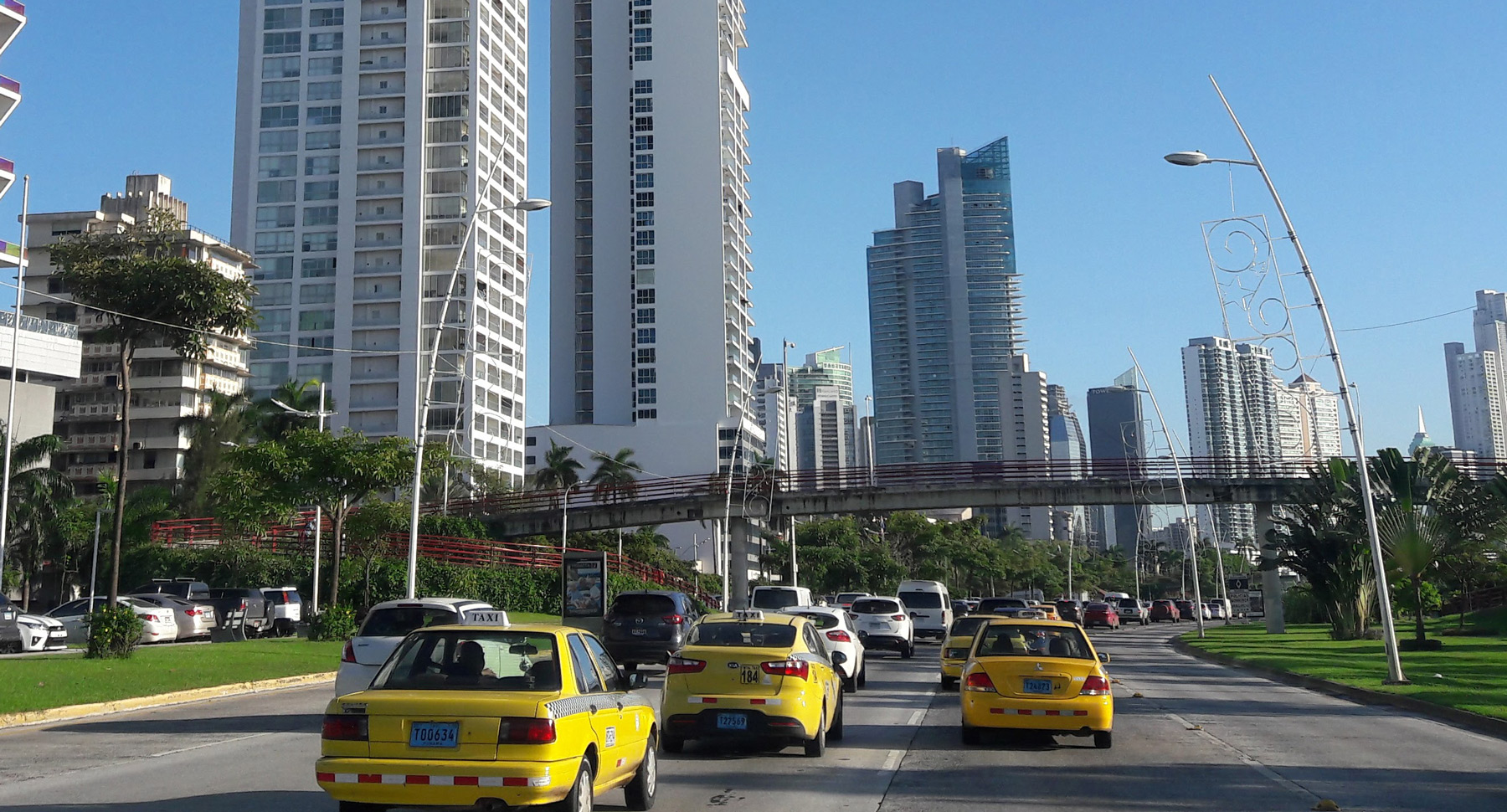
An important tip for taxi rides and other one-off trips:
Most taxi drivers are honest people, mostly poorer residents earning a living this way, though there’s the odd black sheep among them. So when you take the yellow taxis, keep these tips in mind: never get into a taxi that already has other passengers in it. Memorise or jot down the vehicle number on the driver’s door, which is the taxi’s identification number (in a tricky moment you can read this number out to the driver, letting them know you can identify them). In Panama City, use online services like Uber wherever you can. Taxis waiting in front of your hotel are also safe to use.
Climate
Panama has a tropical climate, with average temperatures that barely change over the year. In the lowlands the thermometer climbs to 29 to 34 degrees by day and drops to as low as 23 degrees at night. It’s considerably cooler in the country’s higher regions.
The rainy season runs from mid-April to mid-December. During it, rain falls on average every other day for one to three hours, mostly in the afternoon. How long it rains and how much can vary a lot from year to year, depending on whether Panama is having an “El Niño” year, a normal year, or a “La Niña” year. El Niño brings less rain than normal, La Niña more than average.
The rainy and dry seasons also differ between the Atlantic and Pacific coasts. The Pacific coast has a pronounced dry season from mid-December to mid-April. On the Caribbean coast and in the central cordillera, there can still be heavy rain in places as late as January. By February and March it’s reliably dry on the Caribbean coast too. Even in the dry season, expect two or three more or less heavy showers a month. So don’t be surprised if you’re in Panama during the dry season and still get caught in a downpour a few times. By the same token, the rainy season often serves up blue skies, or a run of days with no rain or only a little.
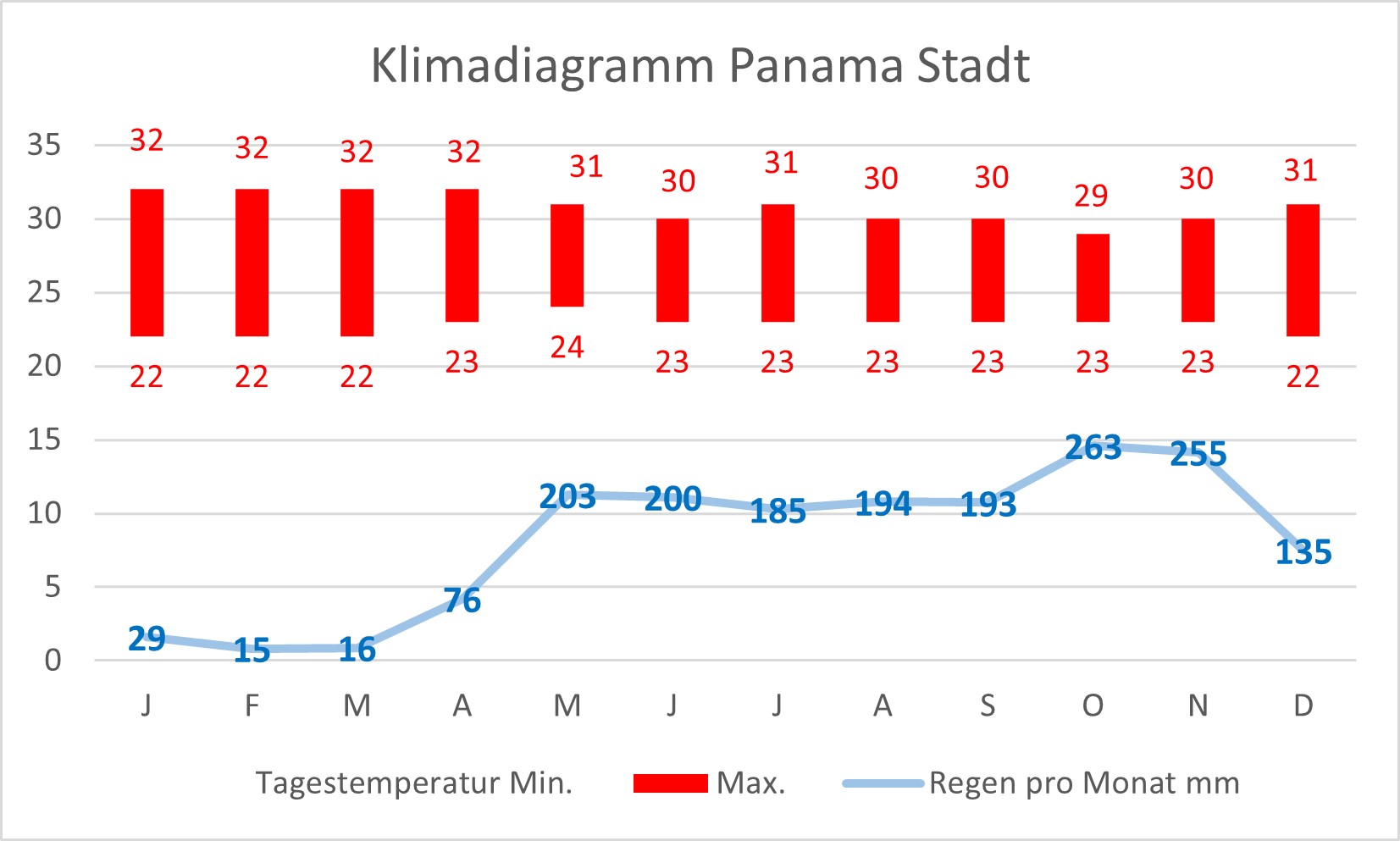
Altitude matters just as much for the temperature in a given spot: as in the Alps in central Europe, the higher you go, the cooler it gets. Have a look at the list below showing temperature by altitude. Panama in particular is a country where you can quickly go from sea level to 1,000 to 1,500 metres above sea level and higher still (up to 3,475 metres if you climb the summit of Panama’s highest mountain). Keep that in mind when you pack your suitcase.
Temperature by Altitude (daily low and high values)
- Coastal areas, lowland rainforest and lowlands: 24 – 34 °C
- Boquete (1,000 meters elevation): 15 – 25 °C
- Boquete Finca Lerida (1,600 meters elevation): 8 – 20 °C
- Summit region of Volcán Barú (3,400 meters elevation): 0 – 10 °C
Language
The national language of Panama is Spanish. In hotels and tourist areas, English is often spoken too (more or less). On top of that, Panama is home to seven indigenous languages.
Religion
The constitution guarantees freedom of religious practice. About 80% of the population are Catholic and 10% belong to evangelical churches. Around 2% are Baha’i and 1.4% are Mormons. Muslims, Jews, Buddhists and Hindus form smaller religious communities in Panama.
Electricity
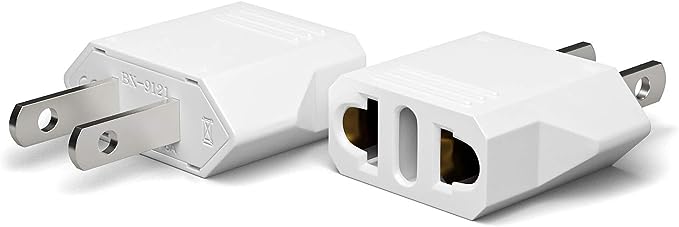
The mains voltage in Panama is 110-120 volts. You’ll need an adapter with plug type A or B (flat pins, as in the USA). These adapter plugs are cheap to pick up at local hardware stores (ferreterías).
Phone Calls and Mobile
Thanks to the 3G, 4G and 5G networks, European mobile phones generally work well in Panama. Hotels almost always have WiFi you can log into for free. If you want a signal on the go, it’s worth buying a local SIM card. A prepaid card with data and a few local talk minutes costs about 5-7 dollars a week. Buy one at a small supermarket or electronics shop, since at the airport SIM cards and prepaid cards are sold at inflated prices, around USD 40-50. The mobile network is good across all the more populated areas; on rainforest tours or remote islands, though, you’ll often find yourself out of coverage.
Tipping
In tourism, whether at hotels, in restaurants or on tours, tips are customary and a way of saying thank you for good service (for example porters, chambermaids, restaurant staff, taxis, drivers, tour guides and so on).
In restaurants, 10% of the bill is customary; many restaurants print tip options of 10%, 15% and 20% on the bill, and you tell the waiter the exact amount you’d like to leave.
On an excursion or round trip, US$ 5-10 per participant per day is customary, and you should budget about half that for the bus driver too, but the exact amount is up to you. A tip is, of course, always voluntary.
Camera and Recording Gear
It’s worth bringing all your recording gear from home (memory cards, batteries, battery packs, chargers and so on), because not everything you need is always available locally, and you won’t have time to trawl through lots of shops. A travel tip: cheap adapter plugs turn up in many hardware stores and small supermarkets too.
Time Zone
The time difference between Panama and Central Europe (CET) is -6 hours in winter. In summer (CEST) it’s -7 hours. So when it’s 12:00 noon in winter in Germany, it’s just 6:00 in the morning in Panama.