

Travel to Panama and sooner or later you’ll land in its vibrant capital, a city that surprises and fascinates in equal measure. Panama City is far more than the economic heart of the country. It’s a melting pot of cultures, a bridge between history and modernity, a place where the tropical rainforest sits just a stone’s throw from glittering skyscrapers.
So how do you make the most of such a many-sided city? This detailed guide gives you an honest, practical overview.
- Which sights are essential? The three faces of the city.
- Where do you find the authentic Panama away from the tourist trails?
- How safe is Panama City really? A nuanced assessment.
- And where is the nearest Panama City beach to relax?
The Three Faces of Panama City: What You Must See
To understand the capital, you have to get to know its three most striking faces, and they couldn’t be more different.
1. The Historic Jewel: Casco Viejo
The heart and soul of the city is, without a doubt, the UNESCO-protected old town, Casco Viejo. Walking here feels like stepping into the colonial past. In the maze of narrow lanes you’ll find carefully restored facades, historic churches whose walls seem to tell stories, and picturesque squares like the Plaza de Francia with its breathtaking view of the skyline. By day, charming cafés, small galleries and boutiques invite you to linger. At sunset the district transforms: the rooftops of the colonial buildings become stylish rooftop bars where you can take in the sea of city lights over a cocktail.
2. The Engineering Masterpiece: The Panama Canal
A visit to the Panama Canal, especially the Miraflores Locks, is an absolute must. This marvel of engineering connects not just two oceans but the country’s history with its place on the world stage. From the visitor center you get a front-row seat as enormous container ships thread through the lock chambers with centimeter precision, an unforgettable spectacle.
One thing to watch for: ships only pass through the locks early, until about 8:30 a.m., then again in the afternoon from about 2:30 p.m. Right now, because of renovation work, visits are heavily restricted and the museum is closed.
And in high season, from November to April, the crowds are huge, so a clear view of the ships can be hard to come by. A good alternative is the Agua Clara and Gatun locks, which are far better suited for watching the ocean giants pass through.
The museum on site offers a deep look into the dramatic history of its construction and the complex workings of the canal.
(The museum is closed for renovation, and the entire visitor center is currently only partially accessible due to this renovation.)
View of the old town (Casco Antiguo) of Panama City from the rooftop terrace of the restaurant “El Faro del Casco.”
3. The Modern Metropolis: Skyline and Cinta Costera
The third face is that of a booming business hub. The skyline of districts like Punta Pacífica and Costa del Este is a bold statement in glass and steel. You get the best sense of this urban energy on a stroll along the “Cinta Costera,” a green waterfront promenade that runs for kilometers. Locals jog, cycle and unwind here while the skyscrapers rise in the background. It’s the perfect place to feel the contrast between historic Casco Viejo and modern Panama.
Beyond the Postcard Motifs: Authentic Experiences
- The view from above: Cerro Ancón. For the best view over the whole city, from the old town across the skyline to the mouth of the canal, there’s no beating Cerro Ancón. This green hill is an oasis of calm and the city’s highest natural landmark. The roughly 40-minute walk to the top often comes with toucans, sloths or agoutis for company. At the summit, the huge Panamanian flag flies proudly, a symbol of national sovereignty.
- Jungle in the city: Parque Natural Metropolitano. Where else can you trade the roar of the city for a real tropical rainforest in a matter of minutes? The Parque Natural Metropolitano is the green lung of the city and a paradise for nature lovers. On well-marked trails you hike through dense vegetation, listen to the cicadas, and, with a little patience, spot monkeys, coatis and countless bird species.
- A taste of Panama: Mercado de Mariscos. If you want the authentic Panama, loud and delicious, head to the fish market. Right on the Cinta Costera, it’s a whirl of activity. The lower hall sells the catch of the day; upstairs there’s a restaurant serving the freshest fish in the city, with more restaurants right next door. One more tip: try the ceviche (raw fish marinated in lime juice), an absolute must for any food lover.
- Biomuseo: On the Amador Causeway stands a museum devoted to biodiversity, designed by star architect Frank Gehry, hence the name Biomuseo. Inside, you can discover how the formation of the Isthmus of Panama helped trigger the ice ages and shape the emergence of humankind. The life-size reconstructions of the Americas’ extinct megafauna are especially fascinating.
Safety Check: Is Panama City Dangerous?
There’s no simple yes or no here. I’ve lived in the city for 20 years and find it safe. As a rule, Panama City is safe for tourists as long as you use common sense and know the ground rules. The tourist zones are well policed and trouble-free. As in any big city, though, there are neighborhoods visitors should avoid.
| District | Assessment | Our recommendation |
|---|---|---|
| Casco Viejo, Punta Pacífica, Costa del Este, San Francisco, El Cangrejo | Very safe | The main districts for tourists, expats and business. You can move around freely here without concern, day or evening. |
| Cinta Costera, Avenida Balboa | Safe | A lively, safe public space by day. At night, stick to the well-lit main areas and avoid the remote stretches. |
| El Chorrillo, Santa Ana (directly adjacent to Casco Viejo), Calidonia, Curundú | Should be avoided | These neighborhoods are marked by poverty and social problems. Tourists shouldn’t enter them, on foot or by taxi. |
The Search for the Beach in Panama City: Where Can You Swim?
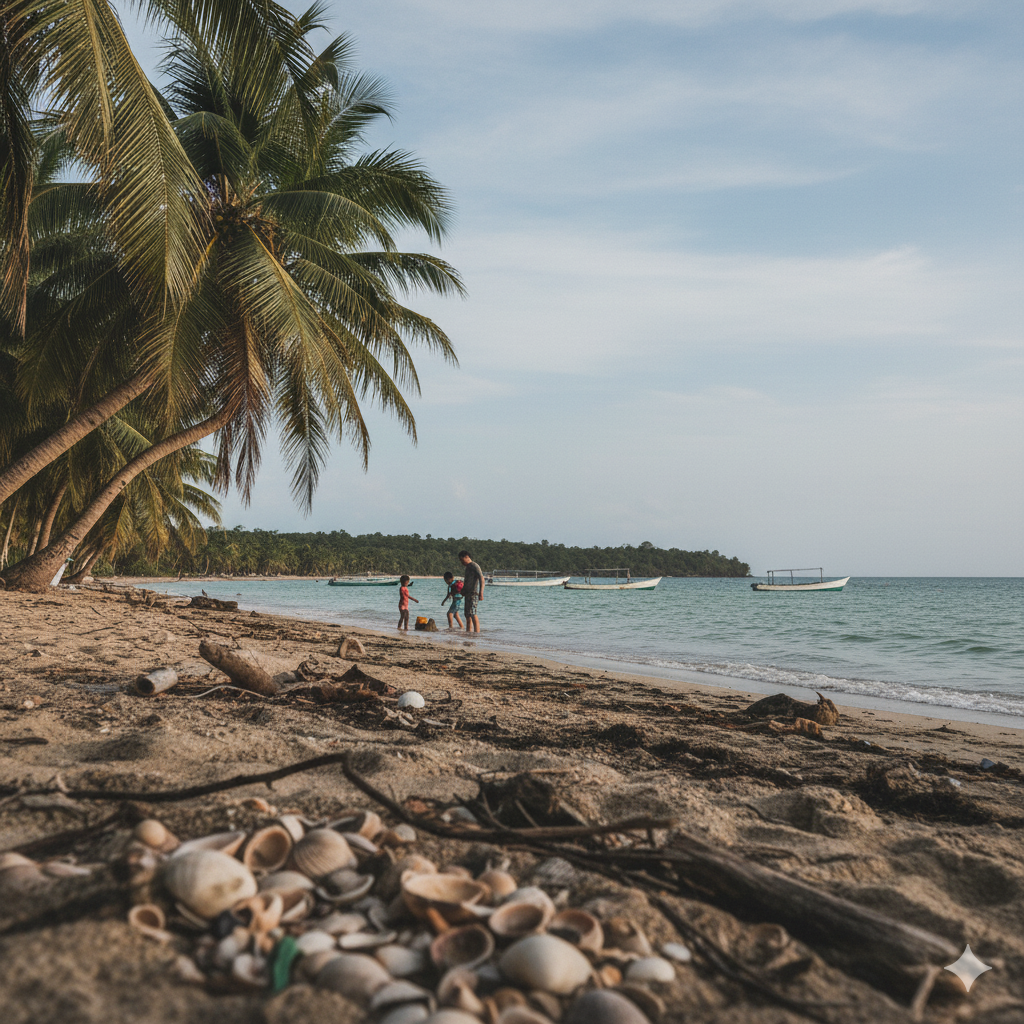
Many visitors are surprised to learn that there are no good swimming beaches within the city limits of Panama City itself. The coast is defined by the harbor, the canal entrance and, at low tide, wide mudflats. For a real beach day, you have to leave town:
- The quick escape: Isla Taboga. The “Island of Flowers” is the closest option, about 30 minutes away by ferry. Taboga has small, simple beaches and a sleepy village, and it’s perfect for a half-day trip out of the city bustle. A heads-up: on weekends the locals throw beach parties, so if you prefer things quiet, go during the week.
- The real beach day: Pacific Riviera. For wide, beautiful sandy beaches, drive about 1.5 to 2 hours west to places like Playa Santa Clara or Playa Blanca. You’ll find good facilities here, with restaurants and sun loungers, ideal for a full day by the sea.
Info Box: Panama City at a Glance
- Essential: Casco Viejo (old town), Miraflores Locks (Panama Canal), Cinta Costera (waterfront promenade).
- Safety: Tourist zones are safe. Avoid El Chorrillo and adjacent districts. At night, rely on official taxis or ride services (Uber).
- Beach: No swimming beach directly in the city. The nearest options are Isla Taboga (ferry) or the Pacific beaches (about 1.5–2 h drive).
- Transport: Uber is widely available, safe and affordable. The metro and city buses (Metrobus) are modern and ideal for routes along the main corridors.
- Insider tip: Enjoy a ceviche at the Mercado de Mariscos and the sunset from a rooftop bar in Casco Viejo.
Who Is Panama City the Right Choice For?
Panama City is the perfect destination for anyone after a lively mix of culture, history, modern city life and easily reached nature. It’s a city for explorers, not for pure beach holidaymakers. Embrace its contrasts and you’ll come away with unforgettable memories.
If you enjoyed this guide, come and discover Panama with us! We’re a small sustainable travel outfit, and we’d love to show you the authentic side of this fascinating city and the whole country.


