

The Embera are one of Panama’s seven Indigenous peoples, and visiting one of their villages is easy to do from Panama City or from Colón on the Caribbean coast. We set out in the morning, driving about an hour from Panama City in a private tour bus toward Lake Alajuela in Chagres National Park. First we wind through the suburbs, past one of the largest cement factories in the country, then reach the park’s visitor center. A few minutes later we arrive at the landing and walk down the bank to the Embera’s dugout canoes, which are already waiting for us.
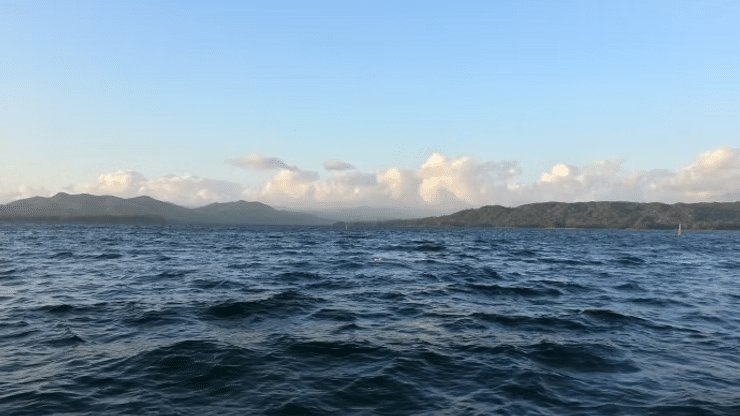
Lake Alajuela (not to be confused with the Gatún reservoir, where the Panama Canal’s shipping channel runs) is a reservoir on the Chagres River, built in the 1930s to supply the canal with water during the dry season. We travel by dugout canoe, first across the lake and then upstream on the Chagres. With their flat hulls, these canoes are the ideal way to get around on the shallow rivers, and the bottom often scrapes over gravel and sand in the riverbed.
Our first stop is the Quebrada Bonita waterfall. “Quebrada” is Spanish for “creek,” and “Bonita” means “beautiful.” The creek here used to be called Quebrada Fea (fea means “ugly”), because of all the stones and rocks in the bed that made it hard for the Indigenous people and campesinos to get through. These days, with tourism, the scenic beauty of the waterfall wins out, hence the new name.
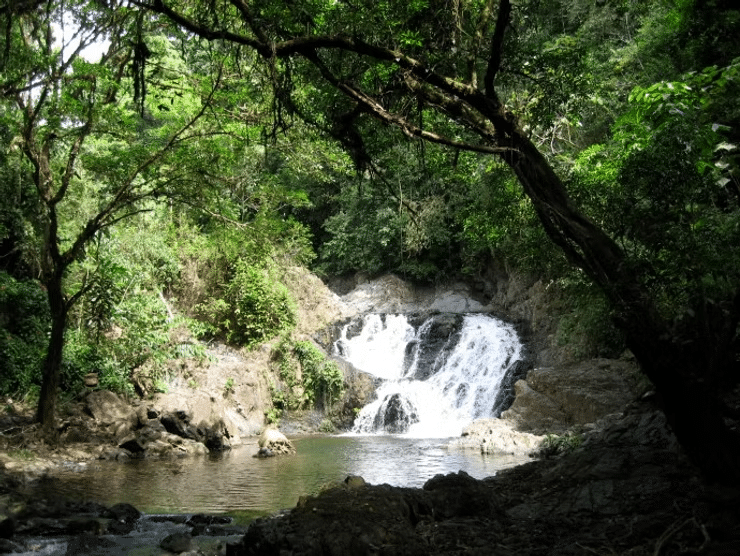
The walk through the streambed and the rainforest is wonderful. With a bit of luck you’ll hear and even see howler monkeys, and there’s plenty of other wildlife to spot, especially birds along the river and in the dense undergrowth. Depending on the water level of Lake Alajuela, it takes anywhere from 5 minutes to half an hour to reach the waterfall from the boat. After a few creek crossings and a little scrambling over a couple of rocks, it comes into view. Below it lies a pool that’s perfect for swimming, so be sure to pack your swimwear.
From there we head back through the creek to the Chagres and continue by dugout canoe to the Embera village of Tusipono (other Embera villages on the Chagres are Parara Puru and Embera Drua; Parara Puru is just 5 minutes from Tusipono, while Embera Drua sits a bit farther upstream). The Embera are waiting for us as we arrive, and as we climb out of the canoe they strike up their traditional music with flutes, drums, maracas and singing.
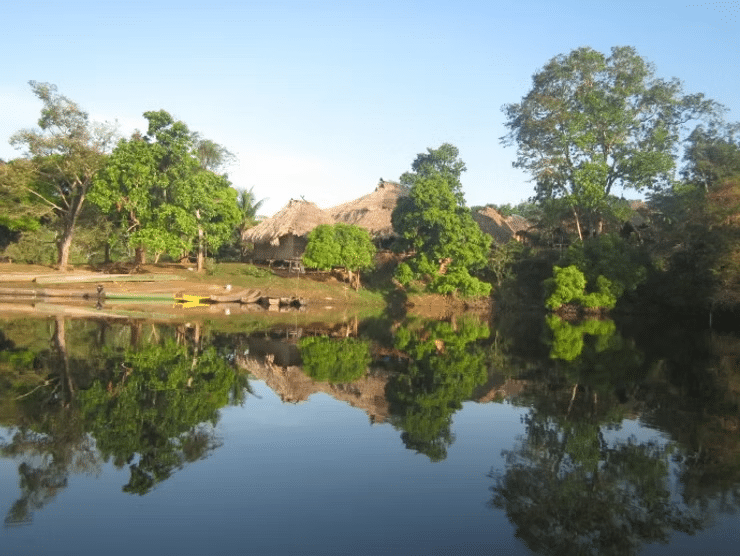
In the assembly house, the chief gives us an official welcome and then tells us more about Embera culture and history. The first Embera families only settled in Chagres National Park in the 1960s. Back then the Panama Canal and the Canal Zone were run by the United States, which recruited the Embera as instructors for jungle survival training, both for soldiers headed to Vietnam and for the Apollo astronauts.
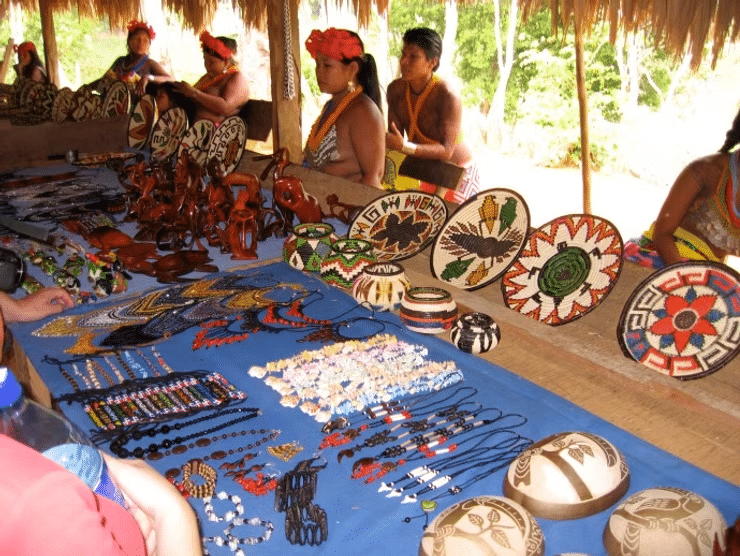
After sharing some fascinating details about their way of life, history, religion, culture and community, they move on to their crafts. The men do the carving, the women the intricate weaving. Only natural materials, such as plants and black earth, are used for dyeing. The Embera have a special basket-weaving technique, working the fibers so tightly you can store water in the baskets without a drop leaking out.
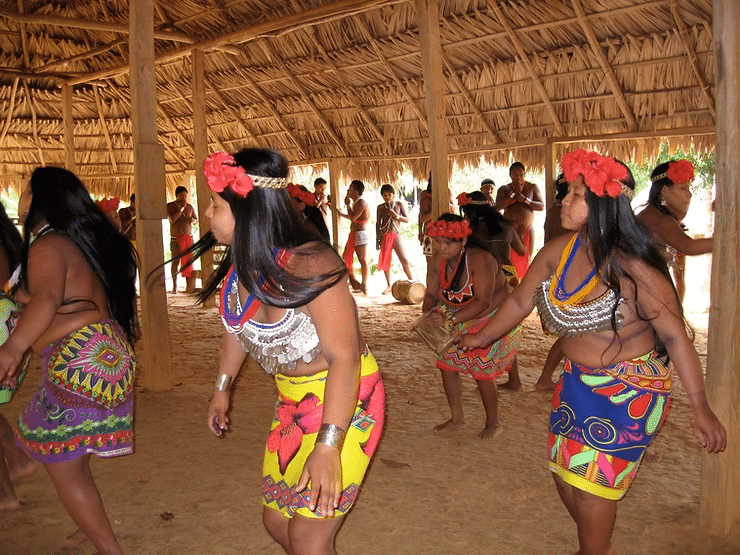
Then the Embera perform their traditional dances. The ones set to flutes and drums are danced only by the women and are dedicated to the animals of the rainforest, like the “butterfly dance” and the “hummingbird dance.” Their couple dances are set to cumbia music, another legacy of Colombia, the country they migrated from into Panama in the 18th and 19th centuries.
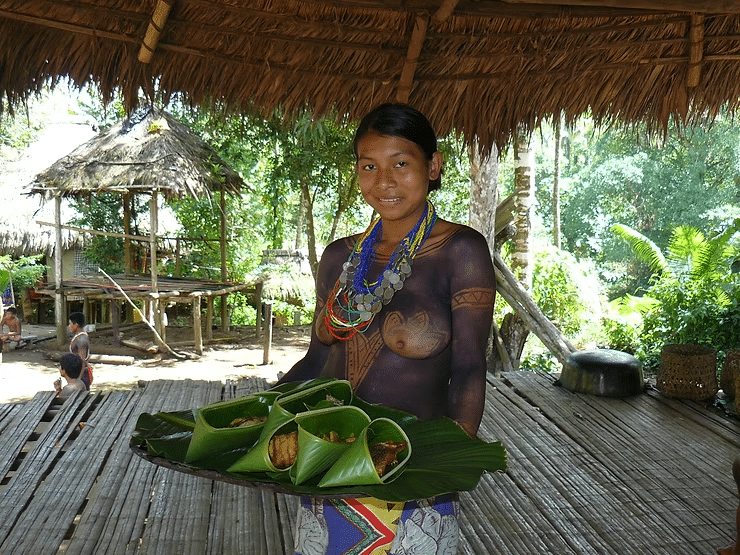
Then the food arrives: fried tilapia and patacones (fried plantains), simply delicious. The tilapia is a freshwater fish, caught fresh from Lake Alajuela nearby, and the patacones taste a little like french fries. Everything comes served in folded banana leaves, nature’s own disposable plates. After the meal, the leaves and organic scraps go into a woven basket and later become fertilizer. Simply brilliant: applied ecology in a rainforest village.
A day trip is exciting, but better still, and this is my insider tip, is to spend a night with the Embera. You get to see village life once the day tourists have gone, watch the Embera at their everyday work, and take extra hikes through the rainforest.
Cultour travel tips:
My insider tip: stay a night with the Embera. A night in an Indigenous village in the rainforest is an unforgettable experience, and you spend plenty of nights in hotels anyway!
Pack a spare set of clothes (shorts, T-shirt, flip-flops) in case you get soaked from rain or the boat ride.
Bring swimwear for the pool at the Quebrada Bonita waterfall (and please, no headfirst dives).


