

A Walk Through the Centuries: Between World Heritage, Pirate Tales and Modern Lifestyle
Vienna has its St. Stephen’s Cathedral, Rome its Colosseum – and Panama City has Casco Viejo.
Anyone arriving in Panama City for the first time is usually overwhelmed by the gigantic skyline. Glittering glass towers reflected in the Pacific, and architecture reminiscent of Dubai or Miami. But the true spirit of Panama, its soul and its history, does not lie in the skyscrapers of Punta Pacifica. It lies hidden in the narrow lanes of a district that juts out into the ocean on a small peninsula: Casco Viejo.
We know Panama, and here’s what we’ll tell you at Panamatura: no visit to this fascinating country is complete without time spent in the colonial old town. Come along on a virtual walk through the district where every stone has a story to tell.
A Place Born from the Ashes: A Dramatic Origin
To understand Casco Viejo, you have to know why it exists at all. It wasn’t the “first” city of Panama. That was Panama Viejo, founded in 1519, the most important transit point for Inca gold on its way to Spain. And that kind of wealth attracts the wrong kind of attention.
In 1671, the notorious English pirate Henry Morgan raided the city. In a desperate bid to keep the treasure out of pirate hands, the Spanish governor blew up the powder magazines and let the city burn. You can still visit the ruins of Panama Viejo in the east of the city today.
But the Spanish didn’t give up. Two years later, in 1673, they founded a new city in a safer spot: a rocky peninsula ringed by reefs that kept enemy ships at bay. That was the birth of Casco Viejo, a city behind thick walls, a fortress against pirates, and the very picture of colonial splendor.
The Architecture: A Mosaic of World History
What makes Casco Viejo so unique is its mix of architectural styles. It isn’t simply “Spanish.” Stroll through the streets today and you’ll see a reflection of the global influences that have always shaped Panama.
- The Spanish colonial style: Thick stone walls, shaded courtyards (patios) and the typical wrought-iron balconies.
- The French influence: When the French made the first attempt at building the Panama Canal in the late 19th century, they brought their architecture with them. Mansard roofs and elegant facades give some corners of Casco Viejo a feel that’s almost reminiscent of the Latin Quarter in Paris.
- The Caribbean lightness: Pastel-colored walls in mint green, sunshine yellow and pink, combined with the vivid colors of the bougainvillea blossoms trailing over the balconies.
Since 1997, the district has been a UNESCO World Heritage Site, and for good reason. It is one of the best-preserved colonial quarters in the Americas.
The Perfect Walk: The Highlights of Casco Viejo
When we plan a tour at Panamatura, we always tell our guests the same thing: let yourself wander. The best discoveries usually happen in the side streets. Still, there are a few spots you shouldn’t miss.
1. The Plaza de la Independencia (Plaza Mayor)
This is the heart of the district. It was here, in 1903, that Panama declared its independence from Colombia. The square is dominated by the majestic Catedral Metropolitana, an architectural jewel with two towers inlaid with mother-of-pearl from the Pearl Archipelago. Take a moment on one of the benches under the shade trees. You can feel the pulse of history here.
2. The Marvel of the “Arco Chato”
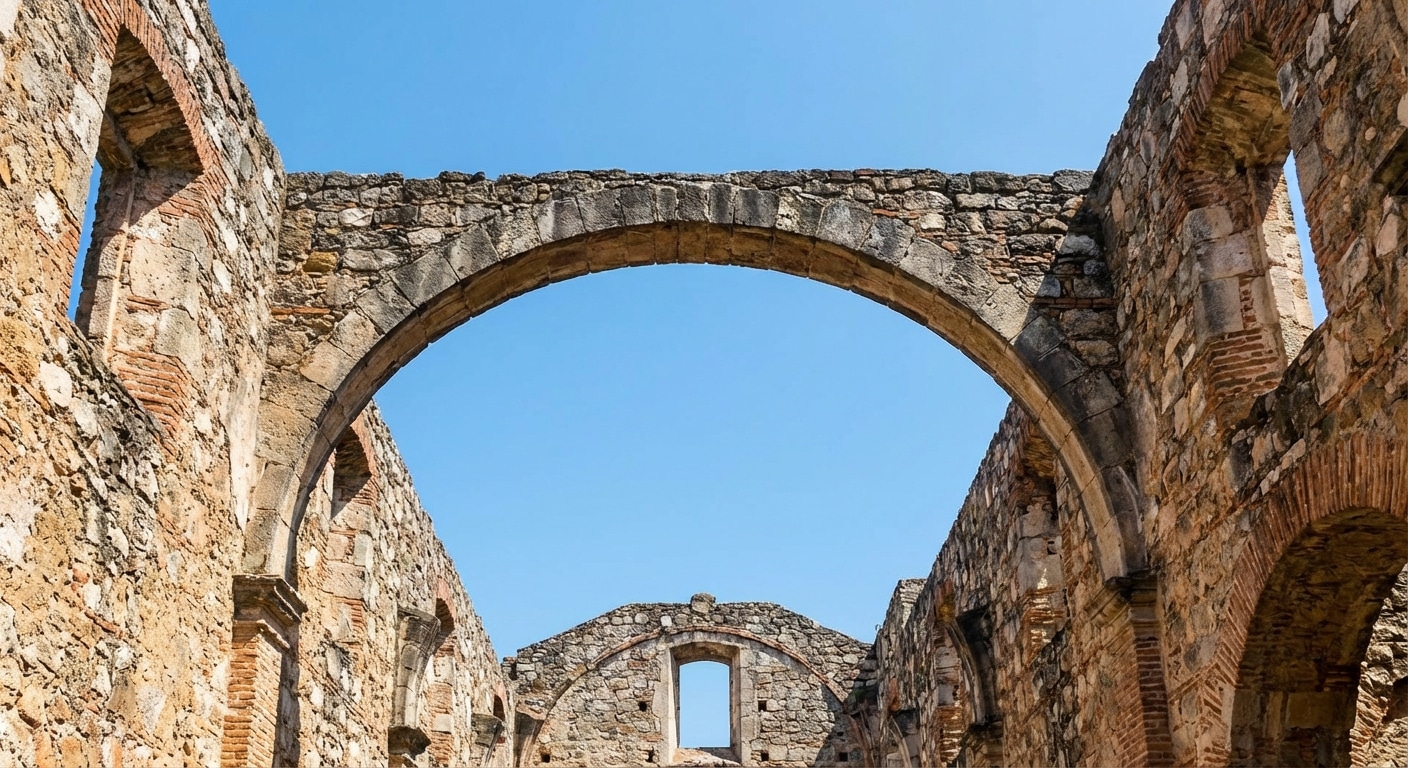
In the ruins of the Santo Domingo church stands the famous Arco Chato, a flat stone arch that stood for over 200 years without a supporting keystone. Legend has it this very arch was the reason the Panama Canal was built in Panama and not in Nicaragua. Why? It was proof the region isn’t plagued by severe earthquakes. A small arch changed world trade.
3. The San José Church and the Golden Altar
Behind a rather unassuming facade hides one of Panama’s greatest treasures: the Altar de Oro. This massive, gold-leafed altar miraculously survived Henry Morgan’s raid. As the story goes, the monks painted it over with black paint (or mud, depending on who you ask) to fool the pirates. When Morgan walked into the church, he took the altar for worthless wood and moved on.
4. Paseo de las Bóvedas and Plaza de Francia
At the southernmost tip of the old town lie the old fortress walls. Atop them runs the Paseo de las Bóvedas, a promenade canopied by bougainvillea. This is where the view is most spectacular: on one side the glittering modern skyline, on the other the lines of cargo ships waiting to enter the canal. The Plaza de Francia also honors the thousands of workers who lost their lives during the French attempt to build it.
Casco Viejo Today: Ruins, Luxury and Joie de Vivre
Anyone who visited Casco Viejo twenty years ago found a district on the verge of collapse. Many houses were squatted, the facades crumbling. But over the past two decades, it has gone through an unprecedented wave of gentrification.
Today, Casco Viejo is the place to be. And it’s a place of contrasts: right next to a freshly renovated luxury boutique you might still find a crumbling house with laundry strung across the windows and reggaeton blaring out. That mix is exactly what gives it its charm. It’s no sterile museum, but a living neighborhood.
Cuisine and Rooftop Culture
For food lovers, the old town is paradise. It’s home to some of the best restaurants in Latin America. Whether it’s fine dining built around Panamanian ingredients or fresh ceviche at the fish market (Mercado de Mariscos) right on the edge of the district, the choice is enormous.
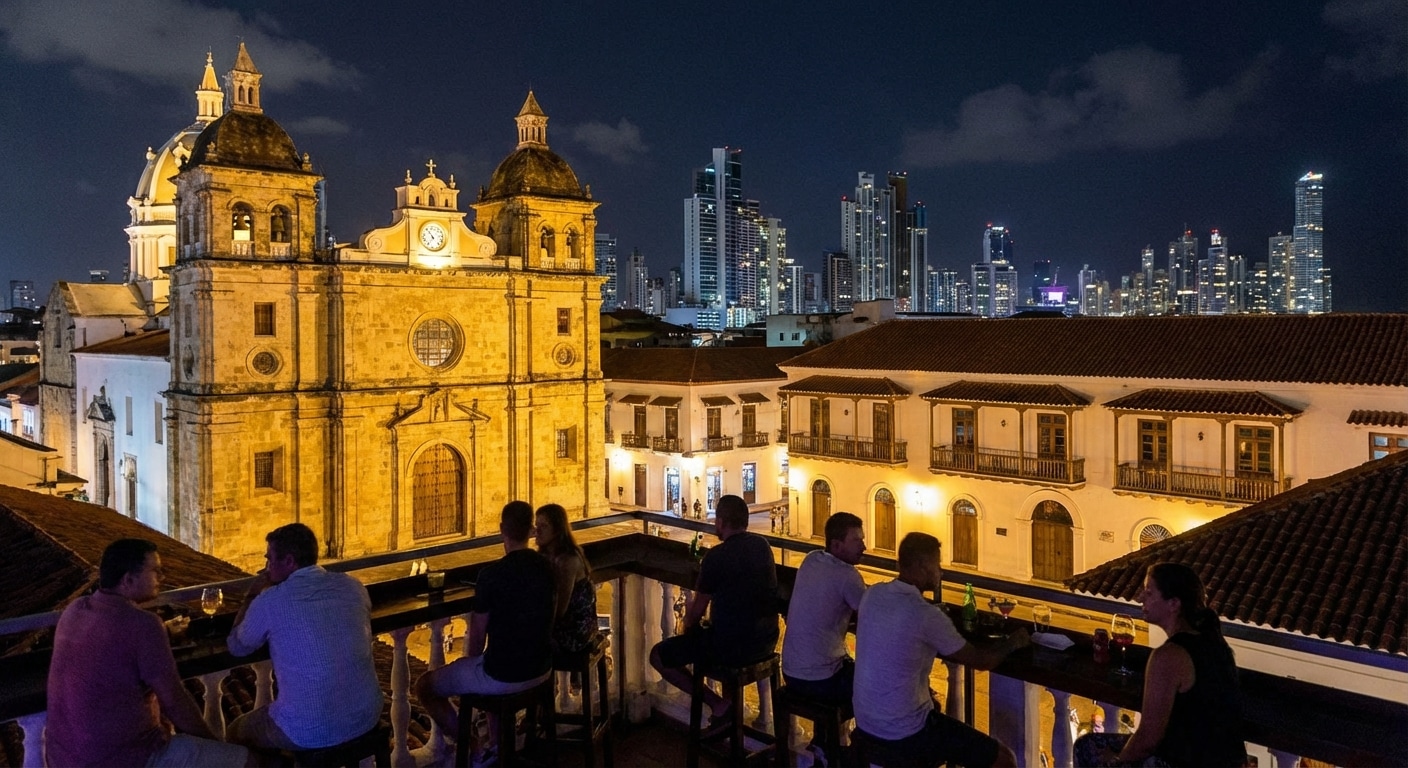
An absolute must for a Panamatura evening: the rooftop bars. When the sun sinks into the Pacific and the skyline lights up, there’s nothing better than sitting above the rooftops of Casco Viejo with a drink in hand. The air is mild, the wind comes in off the sea, and the atmosphere is pure magic.
Why Experience Casco Viejo with Panamatura?
You can explore Casco Viejo on your own, but you’ll miss a lot. The real stories aren’t printed on the information boards. They’re in the details:
- Why are the steps of some houses so high?
- What do the secret symbols on the facades mean?
- Which is the best café where the famous (and most expensive in the world) Geisha coffee is still brewed traditionally?
Our guides at Panamatura don’t just know the dates. They know the people who live here. We take you to hidden rooftop terraces and the little galleries of local artists, and we show you places that aren’t in any guidebook. Our whole point is to make sure your visit isn’t just sightseeing, but real encounters.
Practical Tips for Your Visit
- Footwear: Leave the high heels in your suitcase. The cobblestones of Casco Viejo are treacherous and call for comfortable sneakers or sandals.
- Timing: The best time for a walk is late afternoon (from 4 p.m.). The heat of the day eases off, and you catch the transition into that magical sunset.
- Safety: Casco Viejo is one of the safest districts in the city today, partly because it’s home to the presidential palace (Palacio de las Garzas) and has a strong police presence. Even so, as in any big city, keep an eye on your valuables.
- Panama hat: The famous hat actually comes from Ecuador, but Casco Viejo is still the place to buy a good one. We’re happy to point you to the most traditional shops.
Conclusion: The Heart That Never Stops Beating
Casco Viejo is more than just a historic district. It’s a symbol of Panama’s resilience: a city that was destroyed, rebuilt, nearly fell into ruin again, and today shines more beautifully than ever. It’s where world history and modern life intersect.
Walk through these streets and you breathe the air of explorers, pirates, canal builders and revolutionaries. That feeling of adventure and elegance is exactly what we want to share with you at Panamatura.
Are you ready to experience the magic of Panama City’s old town?
Stroll the lanes of Panama’s colonial old town, take a boat trip on Gatún Lake, visit an Indigenous Embera village, or follow the trail of the Caribbean pirates along the Camino Real. With experienced, English-speaking guides, guaranteed.
FAQs – Frequently Asked Questions About Casco Viejo
Can you stay overnight in Casco Viejo?
Absolutely, and we’d recommend it. There are beautiful boutique hotels set in historic buildings with a charm all their own, a world away from the anonymity of the big chains in the new town.
How much time should you plan for Casco Viejo?
Three to four hours are enough for the main sights. But if you want to soak up the atmosphere, the museums (like the Panama Canal Museum on the Plaza de la Independencia) and the dining scene, plan for at least a full day and an evening.
What is the difference between Casco Viejo and Panama Viejo?
Panama Viejo is the ruins of the very first city (destroyed in 1671). Casco Viejo is the “new” old town, built in 1673, where people still live and work today.


