

Cock-a-doodle-doo, cock-a-doodle-doo. Familiar sounds wake us on day 3 of our tour, too. But it’s not only Pascal’s roosters, two of which are his own, putting in the effort to rouse us. A light-brown puppy finds our tent utterly fascinating and scratches at it nonstop. Shoo him away, and he just keeps finding his way back. Pascal probably owes the little rascal another round of dog school. And a few meters off, a grunting pig is looking forward to the day ahead.
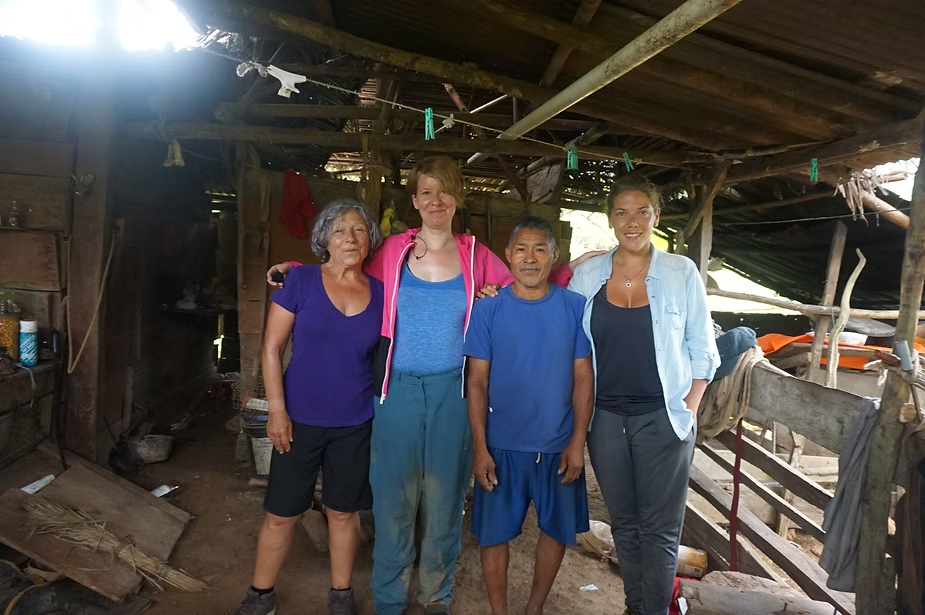
Now it’s time for us to get up too. It’s 6 a.m., which, as someone who loves a lie-in, I find takes some getting used to. Bread, cheese and chorizo “sweeten” the start of our day. “Say cheese!” Before we leave Pascal, we ask Molinar to snap a keepsake photo.
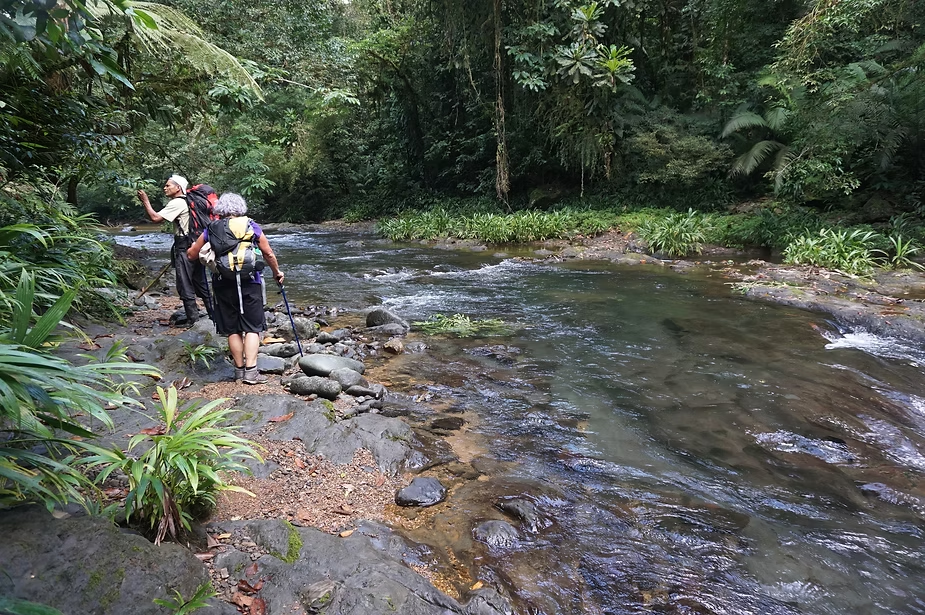
Today’s stage is pleasantly mild. Pastures and meadows are behind us now; on this third day, the Camino Real leads us through shady rainforest. I feel like Indiana Jones. We cross countless riverbeds, picking our way over moss-covered stones in the shallow water. We scramble up muddy hills, wade through deep mud, clamber over rocks and roots, and snake along slippery, narrow paths. For keen hikers, a dream; for me, someone for whom exercise is a foreign word, a real physical challenge.
Inside waits one of the Catholic Church’s curiosities: a black figure of Christ standing in a glass display case.
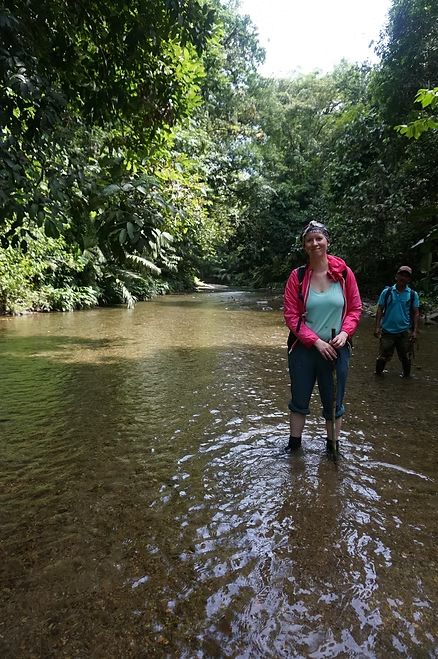
Molinar leads the way fearlessly. With a machete, he clears the path whenever vines and branches make it impassable. He keeps his eyes and ears open, too, in case dangerous animals cross our route. Eugenio brings up the rear, making sure none of us falls behind. I’d never find my way out of this labyrinth on my own. That’s why Christian of “Cultour” works only with locals who know the forest like the back of their hand. The Camino Real is neither signposted nor recognizable as a “classic” hiking trail. Four years ago, the thirst for adventure proved fatal for two Dutch women. They set off on a jungle hike in Panama’s Boquete province without a local guide. Months later, only their remains were found, and the exact circumstances of their deaths have never been established.
But thank goodness, with Molinar and Eugenio that can’t happen to us. Time and again, I’m amazed at how intimately they know their surroundings. They point out well-camouflaged animals I’d never have spotted on my own.
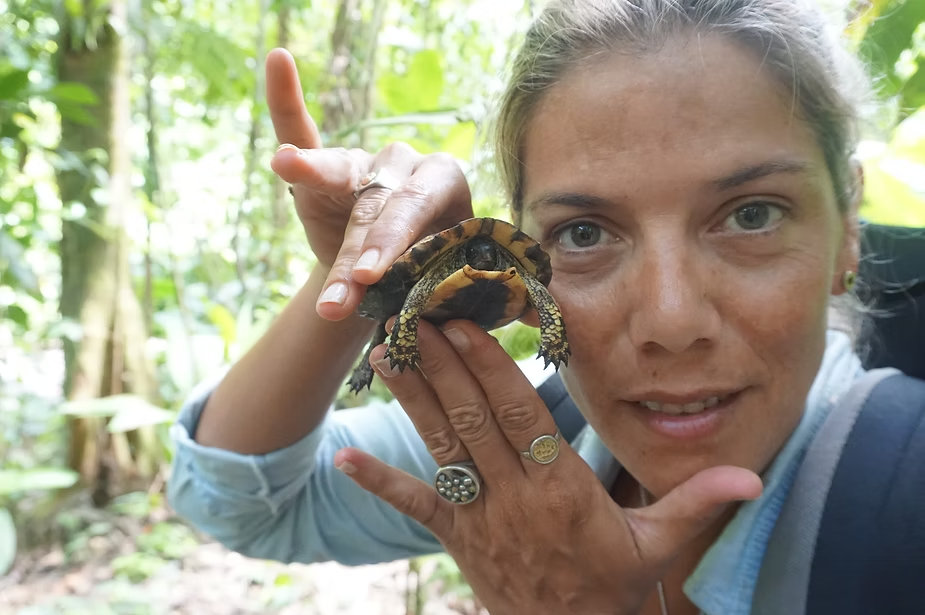
They whittle us sticks for far better footing on the slippery ground, and they hold out their hands to steady us on the trickier descents. When I accidentally reach into an anthill and promptly get stung, Molinar eases the pain with an extractor, a kind of suction pump for insect bites. We’re in the best of hands. Molinar, though, will show his mischievous side in the second half of the day.
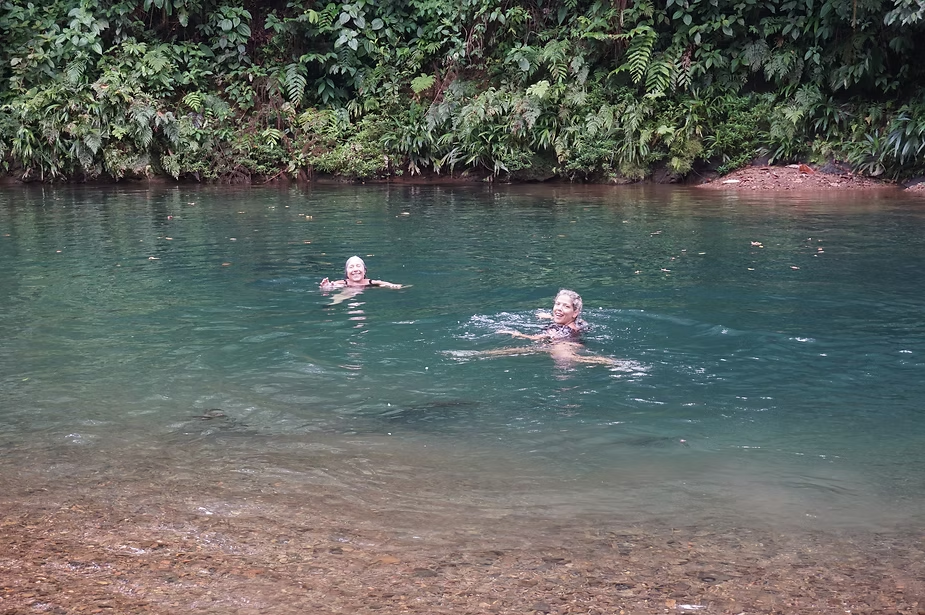
We take our first break at a pond. Alicia and Irene can’t resist and jump straight into the crystal-clear water.
Meanwhile, Molinar and Eugenio filter water, since our supplies are slowly running low. After a 15-minute rest, we set off again.
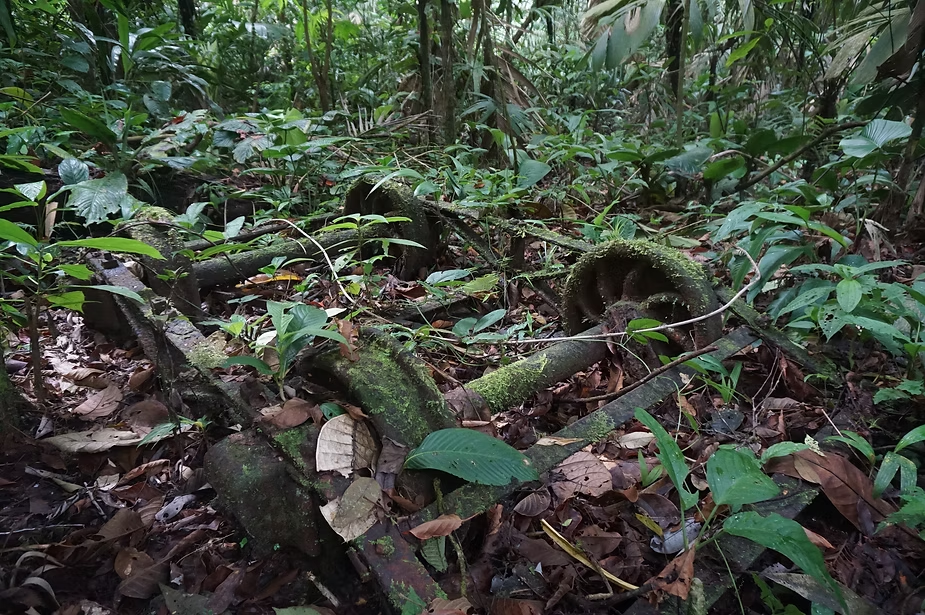
Then I spot something strange. We pass railroad tracks, and soon an old railway bridge looms up ahead. How on earth did those get here, I wonder.
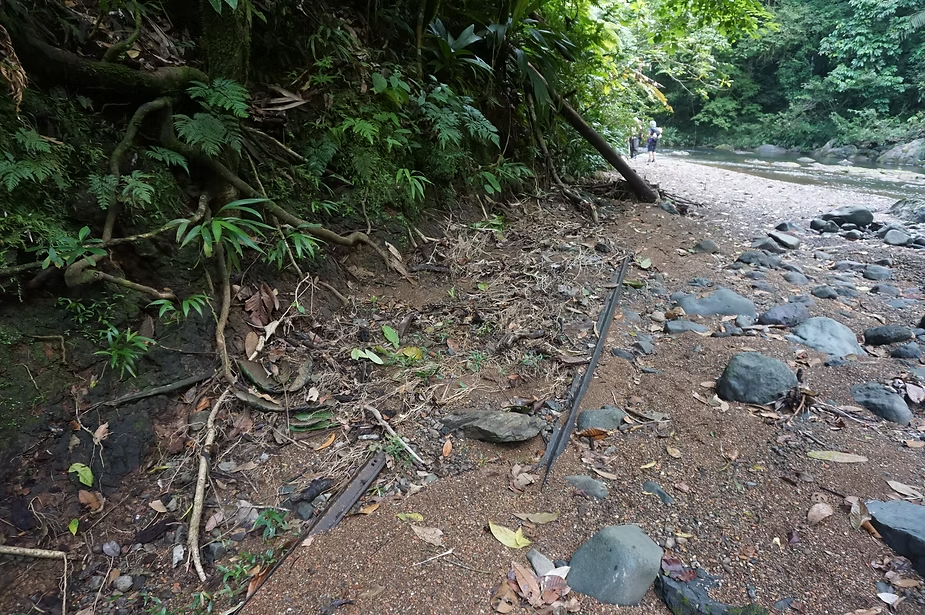
They’re remnants of an old rail line that once served a magnesium mine. The ore was carried from there straight to the Atlantic Ocean.
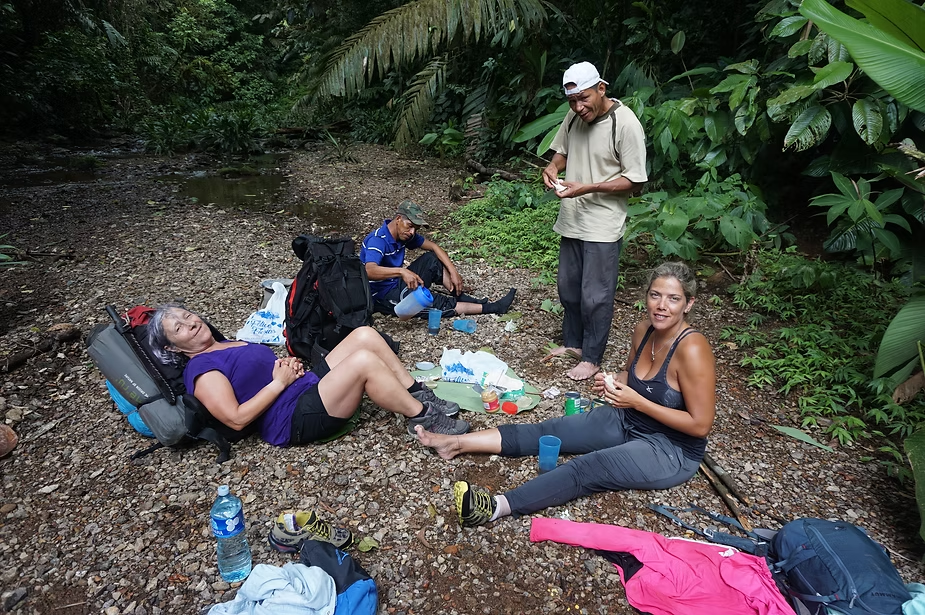
During a longer lunch break, we fuel up on tortillas with cream cheese, tuna and corn.
Molinar urges us onward. After all, we’d rather not reach our overnight stop after dark. The rivers we keep crossing cool our tired feet and rinse the dirt from our clothes. But in a flash we’re filthy again. And so it goes all day long: dirty, clean; clean, dirty.
I don’t want to keep you waiting any longer, so let me explain why the otherwise so thoughtful and helpful Molinar is actually a bit of a trickster. I was just about at the end of my strength when I asked him (my Spanish had improved a little by then) when this day would finally be over. “Veinte minutos,” just 20 more minutes until we could set up camp for the night. Well, surely I can manage that. We walk and walk and walk. Are we there yet, I keep asking myself. And so I learn my first lesson in Panama: take any time or distance estimate and multiply it by three, and you’ll be about right. But the very next day, I’d fall for Molinar all over again.
Well, after about an hour (so much for 20 minutes), we finally arrive. We spend the night with José, who belongs to the Indigenous Embera people.
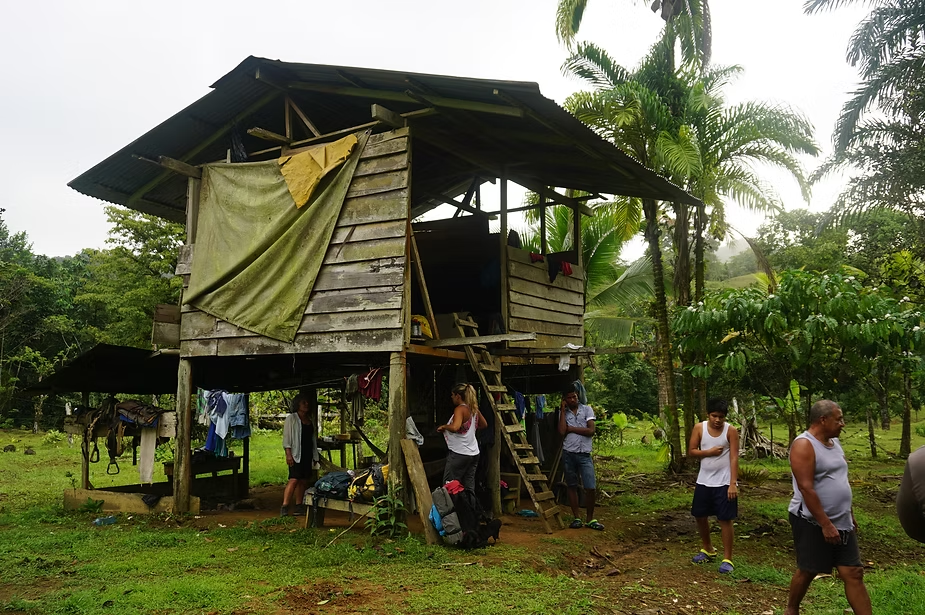
There’s not a rooster or hen to be seen for miles. And I’d so been looking forward to the ritual morning wake-up call. Instead, I listen to other, very strange sounds. Is there a bumper-car ride out here in the middle of nowhere? No, surely not. They’re frogs, someone explains.
I can hardly wait to jump into the river. On the way back, right after the anthill, the second mishap of the day gets me. All spruced up, I sink one foot into a little mud hole. This time, though, it’s not Molinar but our host José who comes running with water to clean my foot. That this isn’t entirely selfless, I find out the next morning.
In the hammock, I’m finally ready to rest my tired limbs. But no such luck! A venomous scorpion grabs everyone’s attention. Eugenio makes short work of it with his machete, though, sending the creature off to the happy hunting grounds. Fun fact that might one day save your life: the longer and thicker a scorpion’s tail and the smaller its pincers, the more venomous it is. So watch out!
But now, off to the tent. I listen a little longer to the fairground croaking before quickly drifting off to dreamland. After a day this exhausting, I really don’t need any help falling asleep.
