

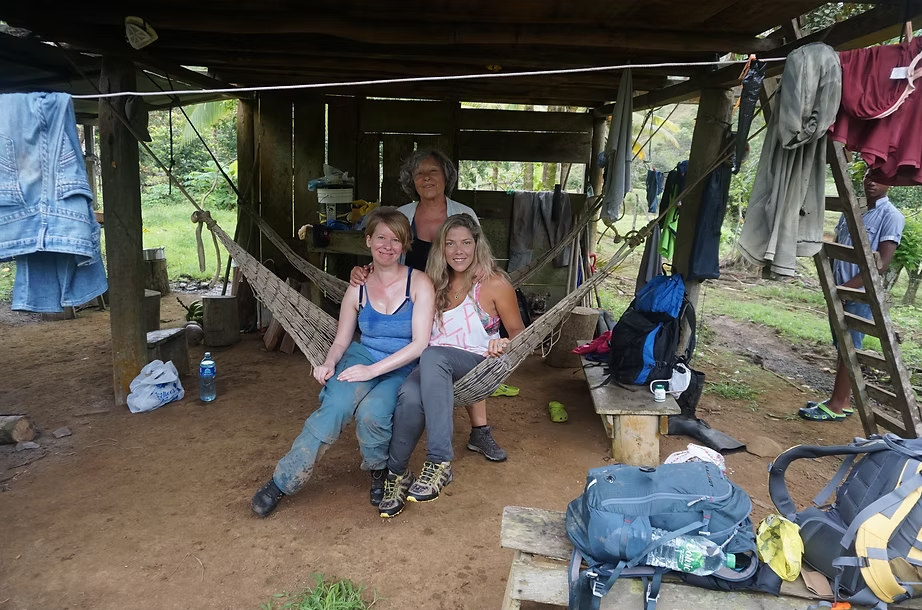
The final day of the “I feel like Indiana Jones” tour dawns. José owns neither hen nor rooster, so this morning there’s no chorus of cackling, one-upping fowl to wake us. But will I even make it to Portobelo? José makes me an almost irresistible offer: I could just stay with him and learn Spanish. Romance in the rainforest. “Should I Stay or Should I Go” by The Clash starts playing in my head. With a heavy heart, I turn the Embera man down.
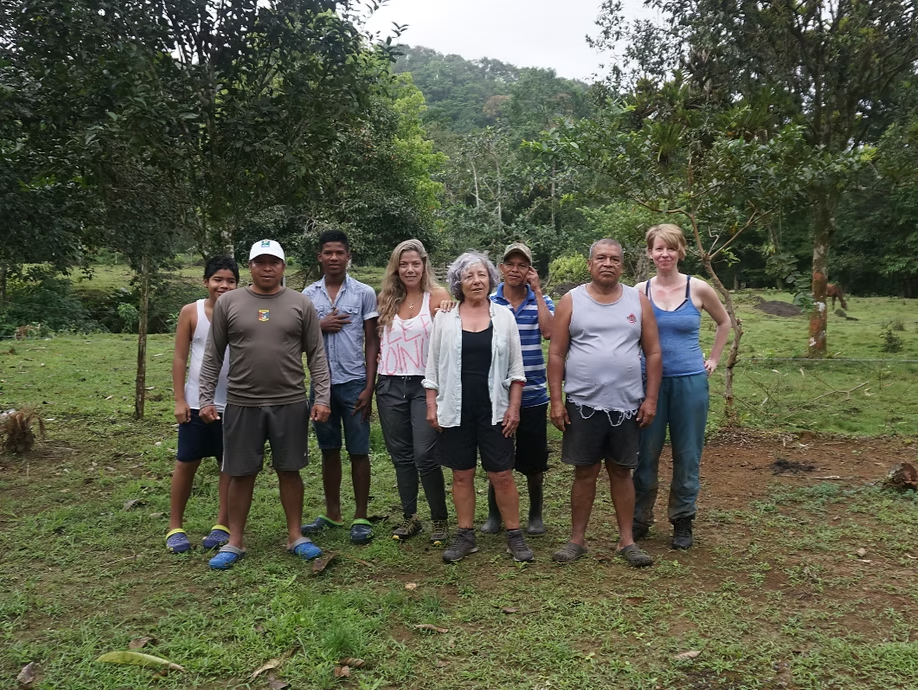
We head for Portobelo, the town of the “beautiful harbor,” as Columbus described it when he stepped ashore here in 1502. Irene is still raving about José’s proposal. In her vision, she pictures me bounding across the meadows with nine children. At 37, I tell her, giving life to that many more kids is going to be pretty tough. She predicts I’ll have triplets three times over. Good grief!
Over the next few hours, we cross the Rio Cascajal dozens of times. After the ups and downs of the past days, this morning’s flat stretch is a real pleasure. But I celebrated too soon. Only three more hills stand between us and Portobelo, Molinar assures us, and I take him at his word. Clearly I didn’t learn yesterday’s lesson: it feels like twenty mountains lie between us and the harbor town. Second lesson: multiply by three or four not just distances, but any number he gives you.
Finally! We reach the road to Portobelo, where our driver Hector is already waiting. We have lunch at a small roadside restaurant.
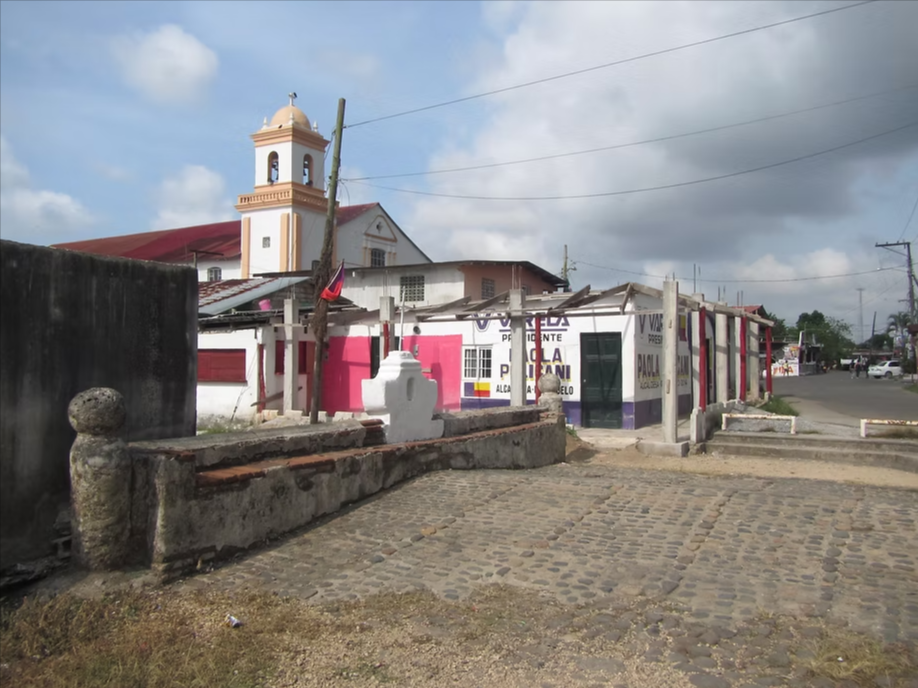
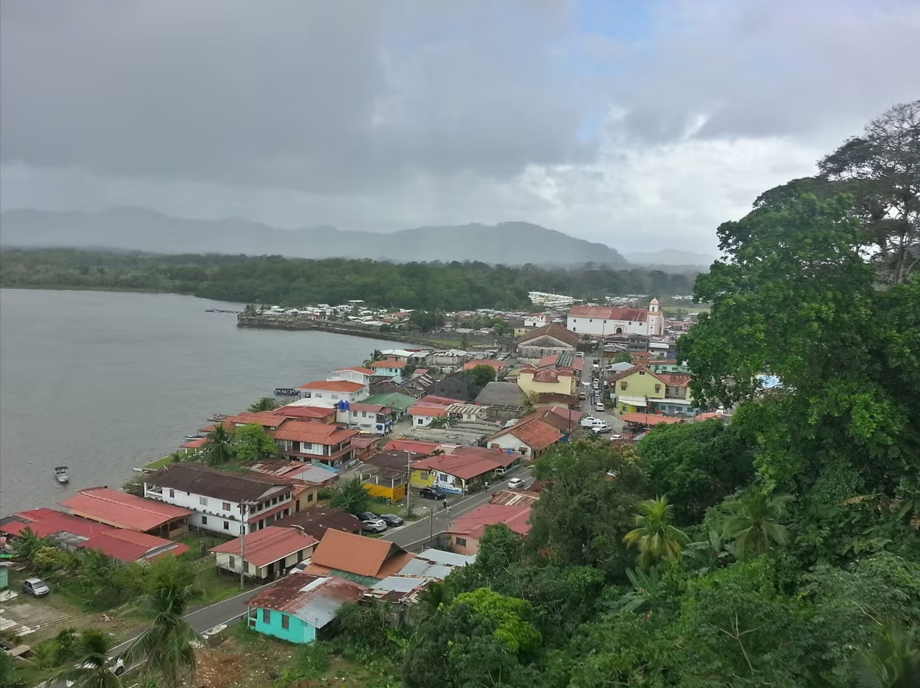
Then we head into Portobelo to explore the sleepy little place it is today. It’s hard to imagine that this Caribbean town was once a major hub for shipping gold, silver, pearls and exotic spices to Europe. We stop in front of the Iglesia del Cristo Negro.
Inside waits one of the Catholic Church’s curiosities: a black figure of Christ standing in a glass display case.
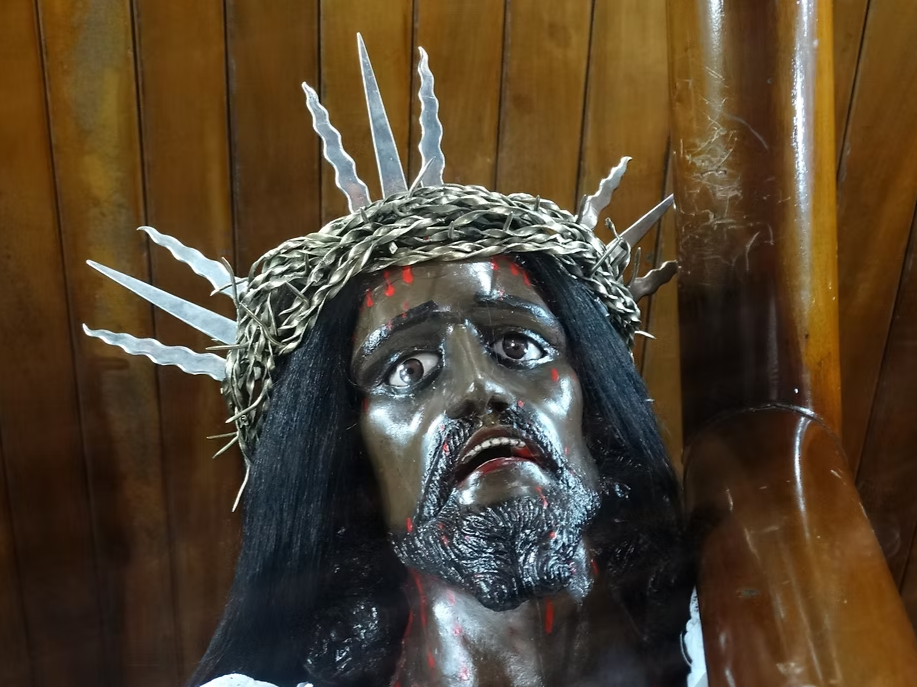
In honor of the Black Christ, one of the country’s most important processions takes place every year on October 21, drawing the faithful from all over Panama. But why is a Black Christ venerated in Portobelo? Legend has it that during a cholera epidemic, a wooden crate surfaced in the bay. Inside was a black statue of Jesus, and the epidemic vanished that very same day, so the story goes.
After marveling at the Cristo Negro, we wander through narrow alleys, past children playing football and locals offering jungle tours. The horizon opens up, and before us lie the fortress ruins of San Jeronimo. The view over the bay is breathtaking. Rainforest-clad hills rise along the coast. White dots speckle the azure Caribbean water: little sailboats, dancing as they cut through the waves.
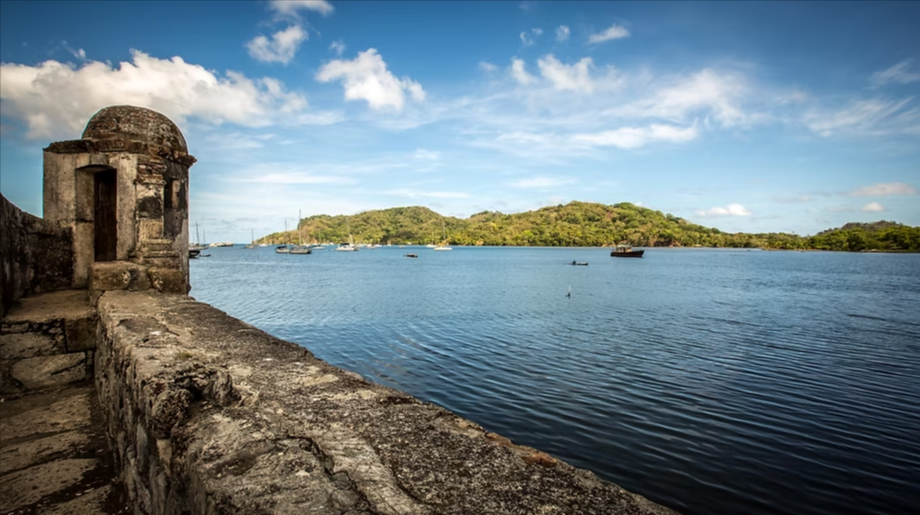
Rusted cannons aim their muzzles at the bay.
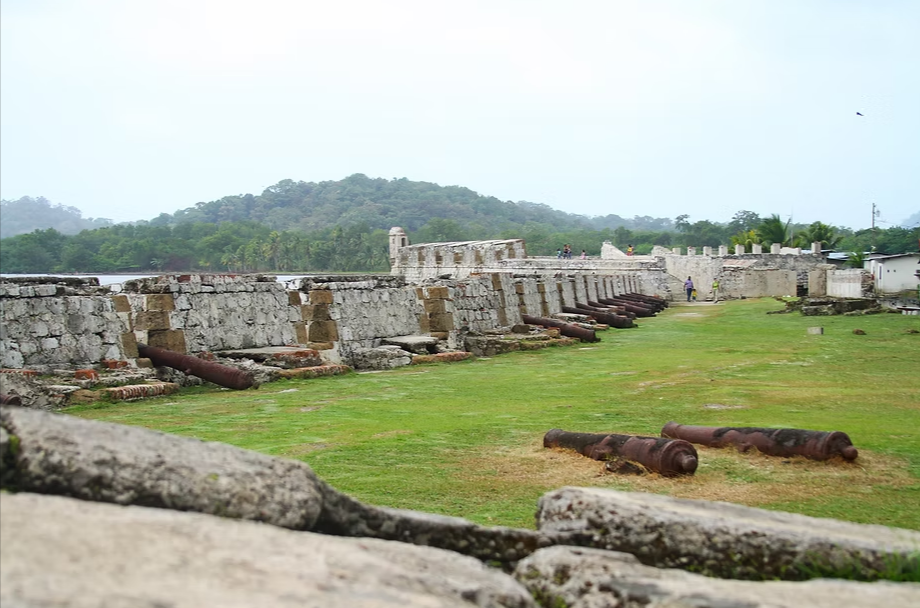
The gray-brown fortress walls, too, are slowly being worn away by time.
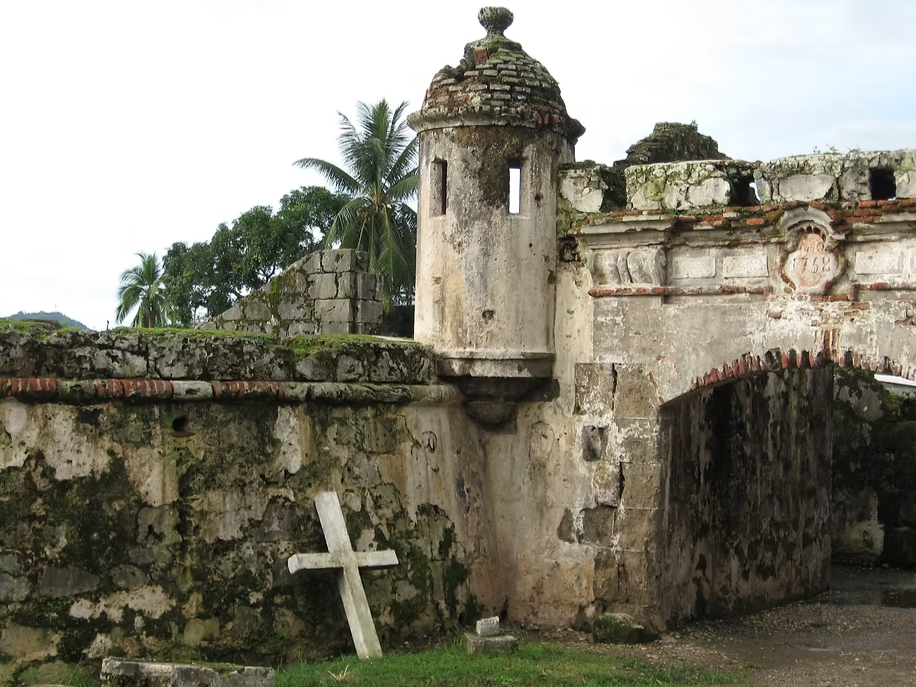
Built in the 17th century, Fort San Jeronimo has been a UNESCO World Heritage Site since 1980. Panama does far too little to protect this historic site from decay. The town lost its importance as a trading post when the Panama Canal was built.
A two-story stone house near the fort catches my eye. It’s the Royal Customs House, built in 1630, where the captured riches were kept until they could be loaded onto the Spanish ships.
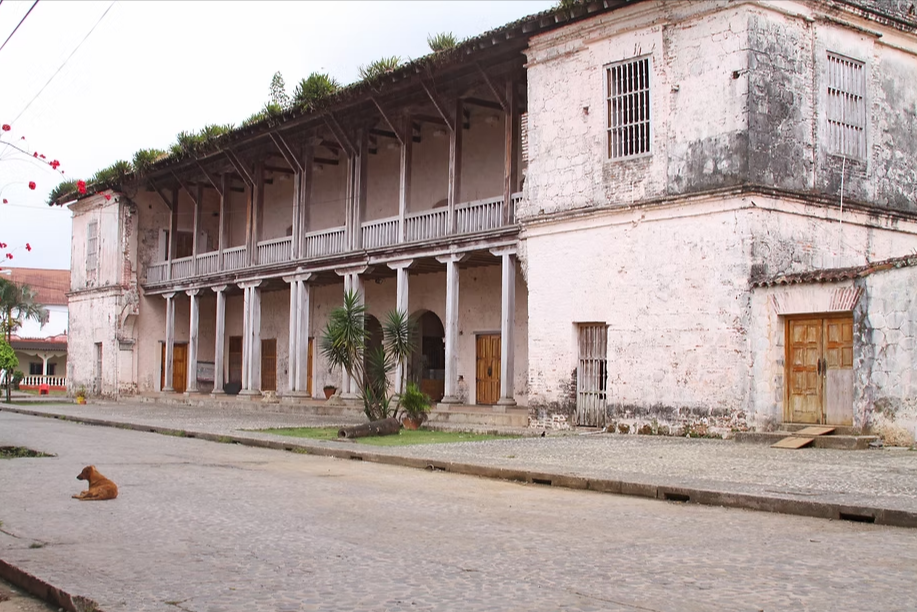
Portobelo, a sleepy little Caribbean town that most tourists seem to breeze right past. A real shame!
But before we leave Portobelo, one more fun fact: Sir Francis Drake sang his final song here. The legendary privateer didn’t die a heroic seafarer’s death, though. In 1596 he was sailing off Portobelo. A month earlier, on behalf of the English crown, he had tried to take Panama City, and it hadn’t gone the way he’d imagined. The Spanish fought back with everything they had against their archenemies. Drake then sailed off toward new targets but returned to Portobelo because of poor winds. There he died not in battle, but of a gut infection. Following old seafaring tradition, his remains were committed to the sea.


